Bathroom Tanking and Floor Prep in Rotherham and Wombwell: Why It's the Hidden Foundation of a Wet Room That Lasts
Bathroom tanking in Rotherham and across South Yorkshire explained. What it is, why skipping it causes problems, and how P&M Home Improvements does it properly.
Tanking Is the Part of a Bathroom Fit Most Homeowners Never See
It goes on before the tiles. It hides behind the panels. Once the job is finished, you will never look at it directly. But bathroom tanking is one of the most important things we do on any wet room, shower enclosure or full bathroom renovation, and getting it wrong is expensive.
We fit bathrooms across Rotherham, Barnsley, Sheffield and the wider South Yorkshire area. Tanking comes up on almost every job. This article explains exactly what it is, why we do it, and what happens when it gets skipped or done badly.
What Bathroom Tanking Actually Is
Tanking is the process of applying a waterproof barrier to the walls and floor of a bathroom or shower area before any tiles go on. Think of it as lining a vessel so water cannot escape into the structure behind.
There are a few different systems. The most common ones we use are:
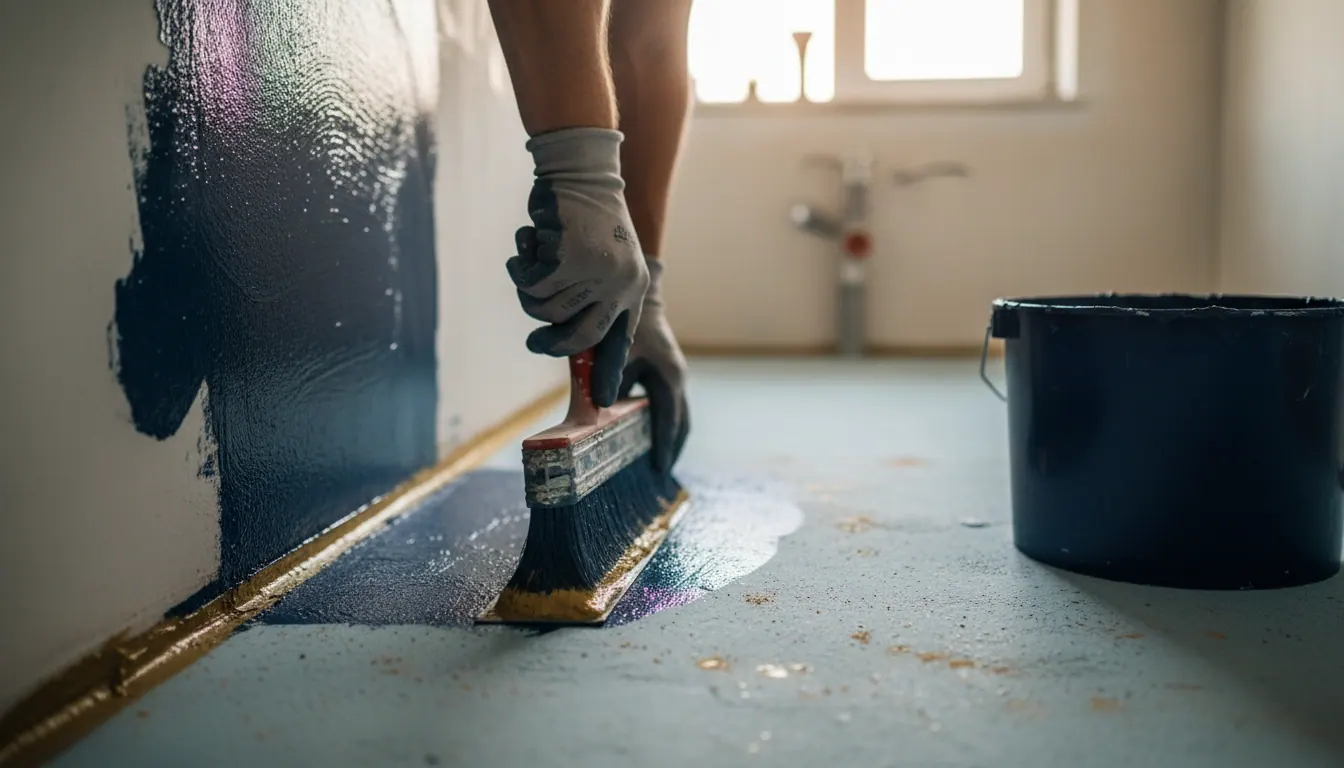
- Liquid tanking slurry applied by brush or roller, usually in two coats, allowed to cure between applications
- Tanking membrane or mat bonded to the substrate, which also provides a key for tile adhesive
- Tape-and-slurry systems where fabric tape is used to reinforce corners and joints before the liquid coat goes over
The right system depends on what is behind it. A boarded stud wall needs treating differently to a solid brick or block wall. A timber floor that has been re-boarded needs a flexible membrane rather than a rigid one. We look at what is there before we decide what to use.
Why Tanking Matters More Than People Realise
Water is patient. A shower used once a day, every day, produces a lot of moisture. Even well-grouted tiles are not fully waterproof at the joints, especially as grout ages or movement causes hairline cracks. Without a tanking layer, that moisture works its way into the substrate over months and years.
The results are predictable: damp patches on adjacent walls, mould behind tiles, rot in timber floors and joists, plaster blowing in rooms next door. In older South Yorkshire housing stock, particularly the terraced and semi-detached homes common across Rotherham, Wombwell and Hoyland, the walls are often solid brick. Moisture that gets into those walls can travel further than you expect.
Re-doing a bathroom because the tanking was missed or done poorly costs significantly more than doing it right the first time. We have seen jobs where a new bathroom fitted by someone else has failed within two or three years because the substrate was never properly waterproofed. Stripping it back out, drying it, re-boarding and starting again is a week's work that nobody wanted to pay for twice.
How We Approach It on a Full Bathroom Strip-Out
When we take on a bathroom renovation in Rotherham or anywhere across South Yorkshire, we strip back to the bare walls and floor as standard. That means:
- Strip out the old suite, tiles, panels and flooring
- Inspect the substrate. Check for any existing damp, rot in the floor joists, or crumbling plaster
- Re-board the floor where needed, typically with 18mm moisture-resistant ply
- Board the walls where needed, using appropriate tile backer boards on stud walls
- Apply the tanking system to all wet areas, paying particular attention to corners, floor-to-wall junctions and any pipe penetrations
- Allow the tanking to cure fully before any adhesive or tiles go on
The floor-to-wall junction is where most failures happen. That internal corner takes movement from both planes and is under constant thermal expansion and contraction. We tape it properly and make sure the tanking laps up the wall and down onto the floor so there is no gap at the joint.
If you are having a level-access wet room rather than a tray shower, the tanking has to work across the entire floor area, not just the shower zone. The falls in the floor need to be set before the tanking goes on so water drains to the outlet rather than pooling. It is a bit more involved, but the principle is the same: no water gets through to the structure. You can read more about how we approach that in our article on level-access wet rooms across South Yorkshire.
The Difference Between a Shower Area and a Full Room Tank
Not every bathroom needs the entire room tanked. A bath with a shower over it, for example, mainly needs the shower wall area and the bath surround treated. A fully tiled wet room is a different matter and needs full-floor coverage.
We work out what is needed based on how the space will be used. A family bathroom in a Rotherham semi with a standard bath and separate shower cubicle has different requirements to a ground-floor wet room in a Barnsley bungalow being adapted for accessibility. We do not apply the same spec to every job regardless. We look at what is there, what is going in, and what will be used.
What Good Looks Like: Tiling Over a Properly Tanked Surface
Once the tanking has cured, the surface is ready for adhesive and tiles. A properly tanked wall or floor gives the tiles a stable, waterproof base to bond to. The adhesive grips well, the tiles sit flat and the grout joints stay consistent.
We do a lot of large-format tiling in bathrooms across South Yorkshire. Big porcelain tiles, 600x1200 or larger, need a flat, solid substrate. Any movement or softness in the base shows up as lippage (where tile edges sit at different heights) or, worse, as cracked tiles down the line. Tanking boards, when installed correctly, give you that flat, rigid surface. If you are interested in how large-format tiling works and why it is worth considering, we have written about it here: large-format tiling in Sheffield bathrooms.
What Our Customers Say
We had Julie back for a second job after her bathroom, which tells you something about how that first project went.
Paul and Malc made a beautiful job of our bathroom so we had them back to sort out our garden, we are so pleased with the work they have done for us. Fantastic guys, with excellent communication, would highly recommend!!!!
Julie Warriner, 5 stars
That kind of result comes from doing the groundwork properly. The visible finish, the tiles, the suite, the lighting, all of that depends on what happens in the first few days of a job. Tanking is part of that groundwork.
Common Questions About Bathroom Tanking
Frequently Asked Questions
Do I need tanking if I am fitting a shower tray rather than a wet room floor?
Yes. The walls around a shower enclosure still need to be tanked, especially the internal corners and any area that gets direct spray. A shower tray handles the floor drainage, but the walls above it are still exposed to daily moisture. We tank the walls in every shower enclosure we fit, regardless of the floor type.
How long does tanking take to cure before tiling can start?
It depends on the product and the conditions. Most liquid tanking slurries need 24 hours between coats and another 24 hours after the final coat before tiling. In a cold or damp South Yorkshire winter, that can stretch slightly. We factor curing time into the job schedule so it never gets rushed. You can read more about why allowing proper time at each stage makes a better result in our article on why bathroom renovations in Barnsley take longer than you think.
Is tanking the same as waterproof paint?
No. Waterproof or moisture-resistant paint has some resistance to condensation on the surface, but it is not a tanking system. It does not seal the substrate against water that gets behind tiles. Proper tanking uses a purpose-made system designed to withstand prolonged water contact, not just surface dampness.
We live in an older terraced house in Rotherham. Do solid brick walls need the same tanking treatment?
Solid brick and block walls are actually more important to tank thoroughly than modern stud walls, because brick is porous and any moisture that gets in can travel laterally through the wall into adjacent rooms. We take extra care on older housing stock across Rotherham, Wombwell, Darfield and the surrounding areas. The process is the same but we pay close attention to the wall condition before we start and address any existing damp before the tanking goes on.
Get in Touch for a Free Quote
If you are planning a new bathroom, en-suite or wet room anywhere in Rotherham, Barnsley, Sheffield or across South Yorkshire, we are happy to come and take a look. We offer free quotes and free advice, and we will tell you straight what the job involves and how long it will take.
Call us on 07817 465504 to arrange a visit. No obligation, just a conversation with two tradesmen who know what they are doing.
No job too big or too small — let's talk it through
Call us- Why Your Bathroom Renovation in Barnsley Takes Longer Than You Think, and Why That's a Good Thing
- Large-Format Tiling in Sheffield Bathrooms: Why Bigger Tiles Mean Fewer Grout Lines and Easier Cleaning
- Level-Access Wet Rooms Across South Yorkshire: What Accessibility Really Means (and Why It Matters Before You Start)