Turfing a New Garden in Sheffield and Rotherham: Soil Prep, Laying and Aftercare That Actually Takes
Thinking about turfing installation in Sheffield or Rotherham? We explain the prep, the process and what goes wrong when corners are cut. Free quotes available.

A New Lawn Starts Long Before the First Roll Goes Down
A fresh lawn transforms a garden. It sounds straightforward enough: strip the old surface, roll out some turf, job done. But a lawn laid without proper groundwork will look tired within a season. It will sink in patches, drain badly, grow unevenly and in some cases simply die off. We see it regularly across South Yorkshire, and it is almost always down to the same few shortcuts taken at the prep stage.
This article explains what turfing installation actually involves, why the groundwork matters as much as the turf itself, and what to look for when you are planning a new lawn in Sheffield, Rotherham or anywhere across South Yorkshire.
Why Ground Preparation Is the Most Important Part
The turf is the visible part. The prep underneath is what determines whether it lasts.
Before a single roll goes down, the existing surface needs to come out properly. That means removing old grass, weeds, moss, debris and any compacted material that will prevent roots from establishing. If the ground is left uneven or poorly cultivated, the turf will root unevenly, dry out in high spots and sit waterlogged in low ones.
Here is what proper preparation looks like:
- Strip and clear. Old lawn, weeds and surface vegetation are removed. Perennial weeds like couch grass and bindweed need to come out by the root. Leaving them in means they push through the new turf within weeks.
- Rotavate or dig over. The soil needs to be broken up to a depth that allows roots to get established. Compacted clay soil, which is very common across South Yorkshire, will not let turf root properly unless it is worked.
- Level the ground. This takes more time than people expect. Raking and treading, raking and treading, until the surface is consistent. Low spots will collect water. High spots will dry out and scalp when mown.
- Topsoil where needed. Many gardens across Rotherham and Sheffield have thin, poor-quality soil sitting over heavy clay or builders' rubble, especially on newer estates or gardens that have been neglected. A layer of good topsoil makes a real difference to how quickly the turf establishes.
- Pre-turfing fertiliser. A light application before laying helps the turf get a foothold quickly, particularly in late spring and summer installs.
None of this is complicated. But each step takes time, and time is where corners get cut.
Laying the Turf: How It Should Be Done
Once the ground is properly prepared, the laying itself follows a clear method.
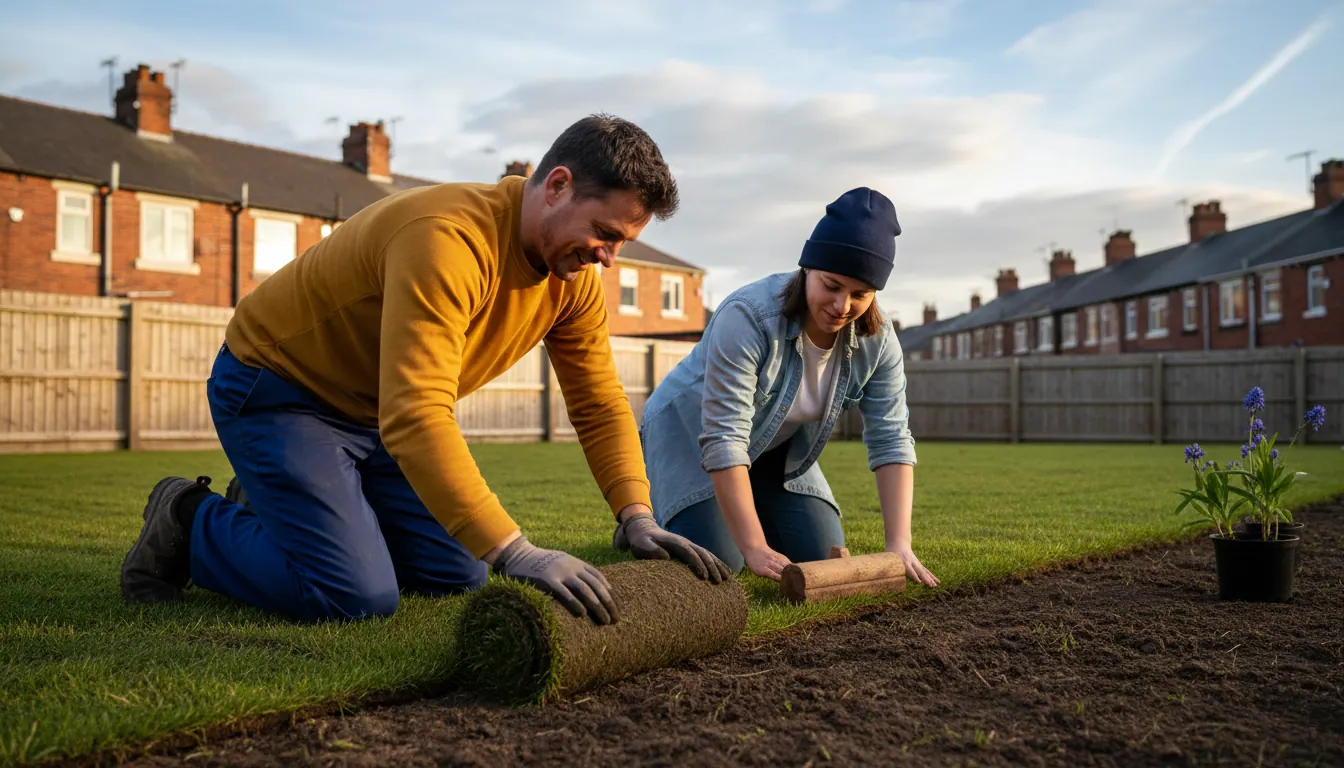
We start from a straight edge, usually a path or border, and work across the garden in staggered rows, like brickwork. This stops the joints lining up and creating visible seams once the lawn fills in.
Each roll is butted tightly against the last. Gaps let the edges dry out and die back before they can root. Overlapping causes humps. Neither is acceptable on a properly finished job.
On sloping ground, which is common across South Yorkshire given the topography around Rotherham, Hoyland, Penistone and the Barnsley area, the turf needs to be laid across the slope rather than down it, and pegged on steeper sections to stop it slipping before it roots. A slope that drains too quickly will dry out the turf before it has a chance to establish. A slope that holds water will cause the roots to rot. Getting the falls right matters here just as it does with any outdoor surface.
Once laid, the turf is rolled to push it into contact with the soil below. Air pockets underneath are one of the main reasons new turf dies in patches.
Aftercare: What Happens in the First Few Weeks
Turfing is not a set-and-forget job. The first three to four weeks are critical.
Watering is the most important factor. New turf needs to be kept moist until the roots have knitted into the soil below. In a dry spell, that can mean watering every day. Lifting a corner of the turf after a week or so is the easiest way to check: if roots are starting to grip the soil, it is establishing well. If the underside comes away clean, it needs more water and time.
The first mow should wait until the turf is properly rooted, usually three to four weeks, and should only take off the top third of the grass height. Mowing too early, too short, stresses the new lawn at exactly the wrong moment.
Avoid heavy foot traffic until the lawn is established. This is especially worth bearing in mind if you have children or dogs.
What Julie Found: Garden Work After a Bathroom Job
We get a lot of repeat work and referrals, and it is always good to hear that a customer trusted us enough to come back for a second project.
"Paul and Malc made a beautiful job of our bathroom so we had them back to sort out our garden, we are so pleased with the work they have done for us. Fantastic guys, with excellent communication, would highly recommend!!!!"
Julie Warriner
Julie's experience is pretty typical of how we work. We do the bathroom, the customer sees how we operate, and then they want us back for the garden. The communication piece matters too. Turfing and landscaping jobs often run alongside other work, and keeping the customer updated on what we are doing each day and what comes next makes the whole process less stressful.
Turfing as Part of a Wider Garden Transformation
A new lawn rarely stands alone. Most garden projects we take on across Sheffield, Rotherham and the surrounding South Yorkshire towns involve a combination of work: turfing, patio laying, raised sleeper beds, levelling, fencing and sometimes a full reshaping of the plot.
If your garden is on a slope, for example, laying turf on an uneven gradient without first addressing the levels is a short-term fix. We often combine turfing with sleeper terracing to create flat, usable sections that drain properly and look good all year round. You can read more about that approach in our article on sleeper raised beds and terracing on sloping gardens across South Yorkshire.
Similarly, if a patio is going in at the same time, the drainage and levels for both surfaces need to be planned together. A patio that sheds water onto a newly turfed area without proper management will cause problems for both. Our article on garden patio drainage in Barnsley and Sheffield covers why falls matter and how we plan for them.
South Yorkshire Soil and Weather: What It Means for Your Lawn
South Yorkshire's soil varies a lot depending on where you are. Around Rotherham and parts of Sheffield, you will often find heavy clay, which drains poorly and can become waterlogged in winter. In other areas, particularly on higher ground around Penistone and Hoyland, the soil is thinner and more free-draining but can dry out quickly in summer.
Both types need addressing at the prep stage. Clay benefits from working in sharp sand and organic material to improve drainage. Thin, sandy soil benefits from topsoil and organic matter to help it retain moisture.
The British climate is not kind to lawns laid on poorly prepared ground. A wet South Yorkshire autumn followed by a cold winter will expose every weakness in the groundwork. Frost heave, waterlogging and moss ingress are all more likely if the prep was not done properly.
Spring and early autumn are the best times for turfing installation in this part of the country. The soil is warm enough for rooting, the air is cooler, and rainfall is usually enough to reduce the need for constant irrigation. Summer installs can work, but they need more careful aftercare.
Frequently Asked Questions
When is the best time of year for turfing installation in Sheffield and Rotherham? Early autumn and spring are ideal across South Yorkshire. The ground is workable, temperatures are moderate and there is usually enough natural rainfall to support rooting. Summer turfing is possible but requires more diligent watering, particularly on free-draining soils.
How long does new turf take to root and establish? In good conditions, new turf starts to root within one to two weeks and is reasonably established after three to four weeks. You should avoid heavy use until the roots have properly knitted into the soil below. Lifting a corner of the turf is the simplest way to check progress.
Do I need to add topsoil before turfing? It depends on what is already there. Many gardens across South Yorkshire, particularly on newer housing estates or gardens that have been neglected, have thin or poor-quality soil. In those cases, a layer of good topsoil makes a significant difference to how quickly the lawn establishes and how well it performs long-term. We assess this as part of the initial visit.
Can you turf a sloping garden? Yes, but it needs more care. Turf on a slope must be laid across the gradient, not down it, and on steeper sections it should be pegged until rooted. We often combine turfing with levelling or sleeper terracing on sloping plots, which gives a better result and a more usable garden overall.
Get in Touch
If you are planning a new lawn or a wider garden project in Sheffield, Rotherham, Barnsley or anywhere across South Yorkshire, we are happy to come and take a look. Between us, Paul and Malcolm bring over 60 years of combined experience in the building and landscaping trade. We offer free quotes and free advice, with no obligation.