Tongue-and-Groove Ceilings in Bathrooms: Why Wood Works (and How to Protect It) in South Yorkshire Homes
Thinking about a tongue and groove bathroom ceiling in South Yorkshire? We explain why it works, how we fit it properly and what to watch out for.

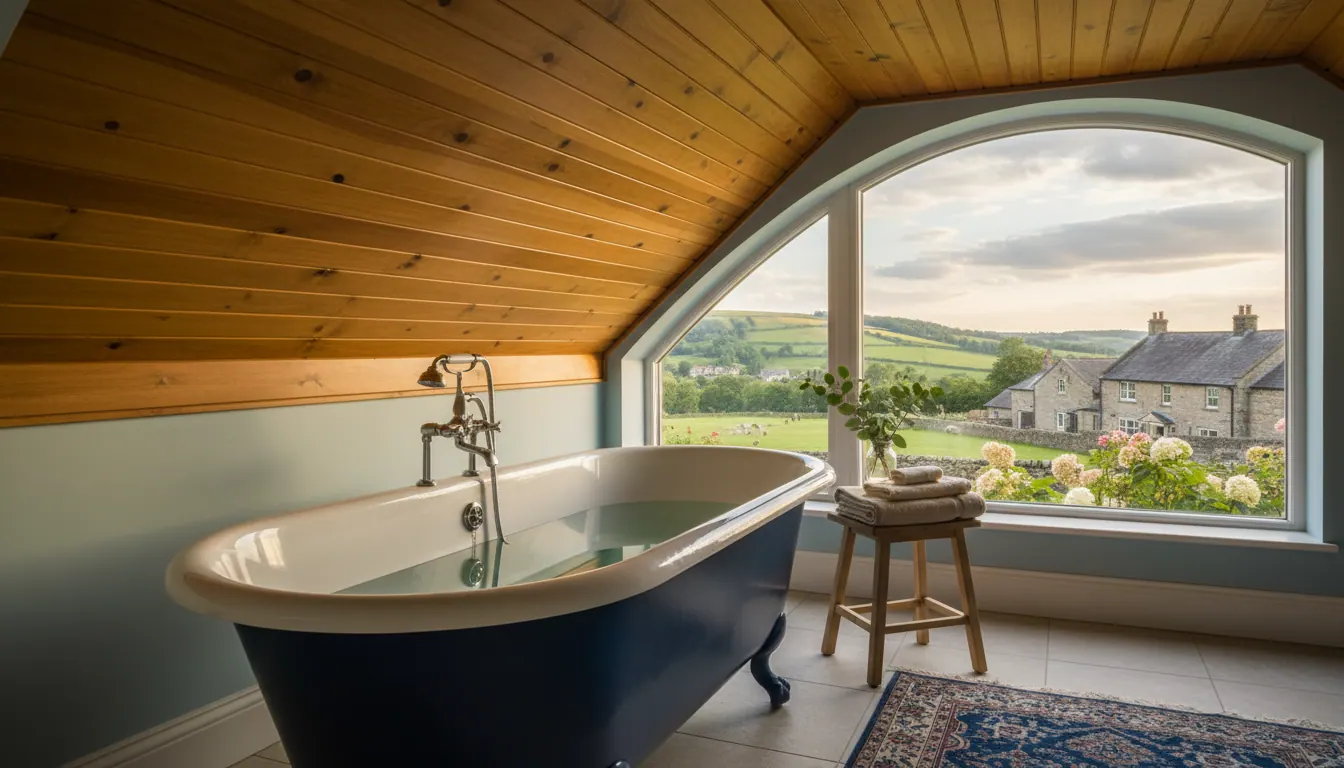
A bathroom ceiling is the one surface most people forget until it starts to flake
Paint on a bathroom ceiling takes a beating. Steam rises, condensation sits, and in older South Yorkshire homes, whether that's a Victorian terrace in Sheffield, a semi in Wombwell or a stone-built house in Penistone, the plaster behind the paint is often tired, cracked or patchy. Once the ceiling starts to look rough, no amount of fresh emulsion fixes it for long.
Tongue and groove cladding is one of the most practical solutions we fit regularly across Barnsley, Sheffield, Rotherham and the surrounding villages. Done properly, it gives you a clean, warm, maintenance-friendly surface that hides a multitude of sins underneath. Done badly, it traps moisture, sags and eventually has to come down again.
This article explains exactly what goes into fitting a tongue and groove bathroom ceiling the right way, and why the details matter.
What tongue and groove actually is (and what it isn't)
Tongue and groove boards are lengths of timber or PVC profile that slot together edge to edge. Each board has a tongue on one side and a groove on the other. They interlock across the ceiling, giving a continuous, smooth surface with no visible fixings.
In a bathroom, most people choose PVC tongue and groove rather than timber. It doesn't absorb moisture, it won't warp, and it wipes clean. Timber can work but it needs the right preparation and the right finish, and in a wet room or shower room it's a higher-maintenance choice. We'll always discuss the options with you before anything goes up.
The boards themselves come in various widths. Narrower boards give a more traditional, cottage feel. Wider profiles look more contemporary. The choice depends on the room, the tiles, the sanitary ware and what the homeowner actually wants.
Why South Yorkshire bathrooms suit this finish particularly well
A lot of the housing stock across South Yorkshire, from back-to-backs in Barnsley to Edwardian semis in Sheffield and stone cottages around Hoyland and Dodworth, has bathroom ceilings that have been plastered and re-plastered over the decades. By the time a bathroom gets to us for a full refurbishment, the ceiling is often uneven, stained, or has had a lowered section added at some point that doesn't line up properly.
Tongue and groove gives us a clean slate. We fix a framework of treated timber battens to the existing ceiling, level them up, and then run the boards across. The old surface underneath becomes irrelevant. What you see is the new boarding, neat and consistent.
It also works brilliantly alongside lowered ceilings fitted with recessed spotlights, which is something we do on almost every bathroom we fit out. If you want to understand why lowering a ceiling for spotlights makes such a difference in older homes, we've written about that in detail here: Lowering Ceilings for Spotlights in Bathrooms: Why It Matters in Older Homes Across Barnsley and Rotherham.
The fitting process: what we actually do
1. Strip and assess first
Before any boarding goes up, we strip the bathroom back. That usually means removing the old suite, the existing tiles or wall panels, and taking a proper look at what's behind. We check for damp, look at the existing ceiling condition, and decide whether the battening needs to account for any falls or unevenness.
2. First fix electrics
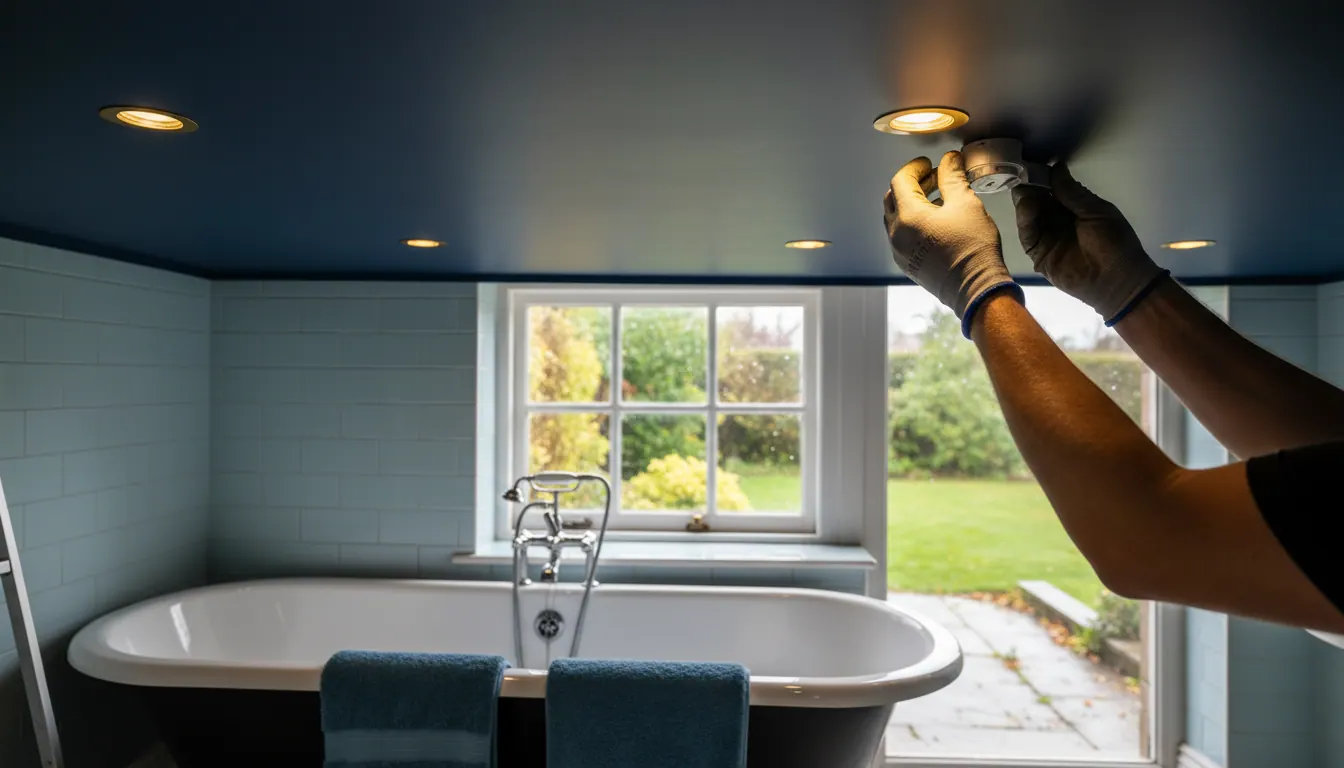
Spotlights need to be in place before the ceiling goes on. The cables need to be run, the back boxes positioned and the transformer location sorted before a single board is fixed. Getting this order right is non-negotiable. If the electrics aren't done first, you're either cutting into new boarding or going without lights where you wanted them.
3. Batten framework
We fix treated timber battens across the ceiling at regular centres. These are levelled carefully. If the ceiling isn't level (and in many older South Yorkshire homes it isn't), the battens compensate for that. The boards run perpendicular to the battens, and the finished ceiling sits flat regardless of what's behind it.
4. Board fixing
PVC tongue and groove boards clip together and are fixed through the tongue into each batten. Because the fixing goes through the tongue, it's hidden by the next board as it slots in. No visible screws, no nail holes to fill.
The first and last boards need cutting to fit, and the edge detail at the wall matters. A neat trim or coving finishes the junction cleanly. This is one of those small details that separates a tidy job from one that looks rushed.
5. Spotlights and finishing
Once the boards are on, the electrician cuts the spotlight holes and drops the fittings in. Any coving, trims or edge profiles get fitted. The ceiling is done.
What goes wrong when corners are cut
The most common problem we see with tongue and groove bathroom ceilings fitted elsewhere is moisture getting behind the boards. This happens when:
- The battens aren't treated timber and they start to rot
- The room has poor ventilation and condensation builds up in the void
- The boards are butted tight to the walls without any allowance for movement
- Cheap PVC profile is used that distorts with temperature changes
Ventilation is worth a specific mention. A bathroom extractor fan needs to be properly ducted to outside, not just into the loft void. In a lot of houses across South Yorkshire, particularly older ones, we find fans that vent into the loft space. That puts warm, damp air directly into the roof structure. When we fit a tongue and groove ceiling, we always make sure the extraction is sorted properly at the same time.
How it sits alongside the rest of the bathroom
A tongue and groove ceiling doesn't exist in isolation. It needs to work with the walls, the floor, the sanitary ware and the lighting.
We often pair it with wall panelling lower down, which gives a cohesive, finished look without the ceiling and walls fighting each other. If you're thinking about tongue and groove panelling on the walls too, it's worth reading our piece on Tongue-and-Groove Wall Panelling in Bathrooms Across South Yorkshire: Style, Durability and Why It Works with Large-Format Tiles.
On the floor, large-format porcelain or LVT works well underneath a tongue and groove ceiling. The clean lines complement each other. The ceiling brings warmth and texture; the floor brings practicality.
What one of our customers said
We've been doing this long enough to know that the proof is in the finished room. Shelayne, who has had us back for multiple phases of work, put it well:
Had Paul & Malcolm for our 3rd lot of home improvements, fantastic from start to finish. Full of great ideas & not afraid to share their knowledge & ideas with you! Will be booking for phase 3 & 4 of our home improvement very soon! Thanks guys look forward to seeing you again soon
That's the thing about a bathroom fit-out. When it goes right, people want us back for the next job. The ceiling is one part of that. It's not the most glamorous element, but getting it right ties the whole room together.
Frequently asked questions
Can tongue and groove go over an existing bathroom ceiling, or does the old surface need to come down?
In most cases, the boarding goes over the existing ceiling on a batten framework, so you don't need to bring the old plaster down. The battens give us a level surface to work from regardless of what's behind. We'll always check the existing ceiling for damp or structural issues before we commit to that approach, but it's the most common method we use across Barnsley, Sheffield and South Yorkshire.
Is PVC tongue and groove better than timber for a bathroom ceiling?
For most bathrooms, yes. PVC doesn't absorb moisture, won't warp with steam, and is straightforward to wipe clean. Timber can look beautiful and can work well in the right setting, but it needs the right preparation and a durable finish to cope with a bathroom environment. We'll talk through both options with you when we come to quote.
Does a tongue and groove ceiling need an extractor fan?
A good extractor fan is important in any bathroom, but it matters more when you have a void above the boarding. The fan needs to be ducted properly to outside, not into the loft. We check this as part of the job. A ceiling that looks good on day one but has condensation problems by winter is not a job done properly.
How long does fitting a tongue and groove bathroom ceiling take as part of a full bathroom refurbishment?
The ceiling itself, once the battens are in and the electrics are roughed in, goes up relatively quickly. The time in a full bathroom refurbishment comes from doing things in the right order: strip-out, any structural or prep work, first fix electrics, tanking and floor prep, tiling, then the ceiling and second fix. Rushing any stage to save a day creates problems further down the line. We'll give you a realistic programme when we come to see the job.
Get in touch
Between us we have over 60 years of experience in the building industry, and we cover Barnsley, Sheffield, Rotherham, Wombwell, Hoyland, Penistone, Dodworth, Darfield and the surrounding villages. If you're planning a bathroom refurbishment and want a straight conversation about what's involved and what it would take to do it properly, we're happy to come and take a look, no charge for the visit or the advice.
You can find us, see our recent work and get in touch at www.pm-homeimprovements.co.uk.
“Paul and Malc made a beautiful job of our bathroom so we had them back to sort out our garden, we are so pleased with the work they have done for us. Fantastic guys, with excellent communication, would highly recommend!!!!”