Tongue-and-Groove Wall Panelling in Bathrooms Across South Yorkshire: Style, Durability and Why It Works with Large-Format Tiles
Thinking about bathroom wall panelling in South Yorkshire? We explain the options, costs and fitting process for Barnsley, Sheffield, Rotherham and beyond.
Bathroom Wall Panelling in South Yorkshire: The Honest Guide from a Local Fitting Team
Tiles are brilliant. We fit them every week across Barnsley, Sheffield, Rotherham, Wombwell and the wider South Yorkshire area. But not every bathroom needs tiles, and not every homeowner wants them. Bathroom wall panelling has become a genuinely popular alternative, and for good reason. Done properly, it looks smart, performs well and can save time on the fit.
This article explains how panelling actually works in a real bathroom, where it excels, where it has limits, and what you should know before committing to it.
What Bathroom Wall Panelling Actually Is
"Panelling" covers a range of products, so it is worth being clear. In a bathroom context, the term usually refers to one of these:
- PVC or uPVC cladding panels. Tongue-and-groove or shiplap-style boards, typically 250mm to 375mm wide, clicked or glued together. Fully waterproof, light and relatively inexpensive.
- Acrylic or composite wall panels. Larger rigid sheets, often 1200mm wide, designed to cover a full shower wall in two or three panels with minimal joins. Some mimic stone, marble or concrete.
- Tongue-and-groove MDF or real timber. Traditional wooden bathroom wall panelling, used more often on lower half-walls (dado height) or in cloakrooms. Needs sealing carefully in wet zones.
- Waterproof laminate or SPC panels. A newer category, denser than PVC, with a more convincing surface texture.
Each type suits a different situation. We will walk through them.
Is Panelling in a Bathroom a Good Idea?
Yes, in the right circumstances. Here is the honest answer.
Panelling works very well when:
- You want a clean, low-maintenance surface with minimal grout lines to scrub.
- You are working to a tighter budget and want a fresh-looking result without the cost of large-format porcelain.
- The existing walls are uneven or the substrate is not solid enough to tile directly without significant prep.
- You are doing a quick refresh rather than a full strip-back renovation.
- You want a specific look, such as a tongue-and-groove coastal feel or a marble-effect feature wall, that would cost considerably more in real tile.
Panelling is less ideal when:
- You are fitting a full wet room or level-access shower with a tiled floor. In that situation, the floor and walls need to work as a continuous waterproofed system, and tiles generally integrate better with the tanking membrane.
- You want the most durable, long-term surface in a high-use family bathroom. Good quality porcelain, properly bedded, will outlast most panel products.
- You are selling the house and buyers in your area expect tiling in a bathroom. In South Yorkshire, as elsewhere, tiled bathrooms tend to read as higher quality to buyers.
So: panelling is a good idea in plenty of bathrooms. It is not a universal upgrade, and we will always tell you honestly which approach suits your specific room.
The Wall Prep Question Nobody Talks About Enough
This is where fitted panelling either lasts or fails, and it is the bit most DIY guides skip over.
PVC cladding and composite panels are typically glued or mechanically fixed to the wall behind. If that wall is damp, loose plaster or old tiles with hollow spots, the adhesion fails over time. Water gets behind the panels, mould develops, and you end up stripping the lot out sooner than expected.
Before we fit any wall panelling, we check:
- Whether the existing plaster is sound and dry.
- Whether there is any sign of damp behind the walls, particularly around the bath or shower area.
- Whether the substrate needs boarding out first (sometimes a sheet of moisture-resistant plasterboard or a cement board gives a far better base than tired old plaster).
In a full bathroom renovation, we typically strip to bare walls anyway, re-board with moisture-resistant board, and then either tile or panel on top of a solid, dry, flat surface. That is the right way to do it. If you are just refreshing an existing bathroom without a full strip-out, we will assess the walls before we start and advise you on what prep is actually needed.
Wooden Bathroom Wall Panelling: Where It Works in South Yorkshire Homes
Real wood and MDF tongue-and-groove panelling has had a strong revival, particularly in older terraced and semi-detached homes across Barnsley, Penistone, Dodworth and similar areas. The look suits the age and character of those houses well.
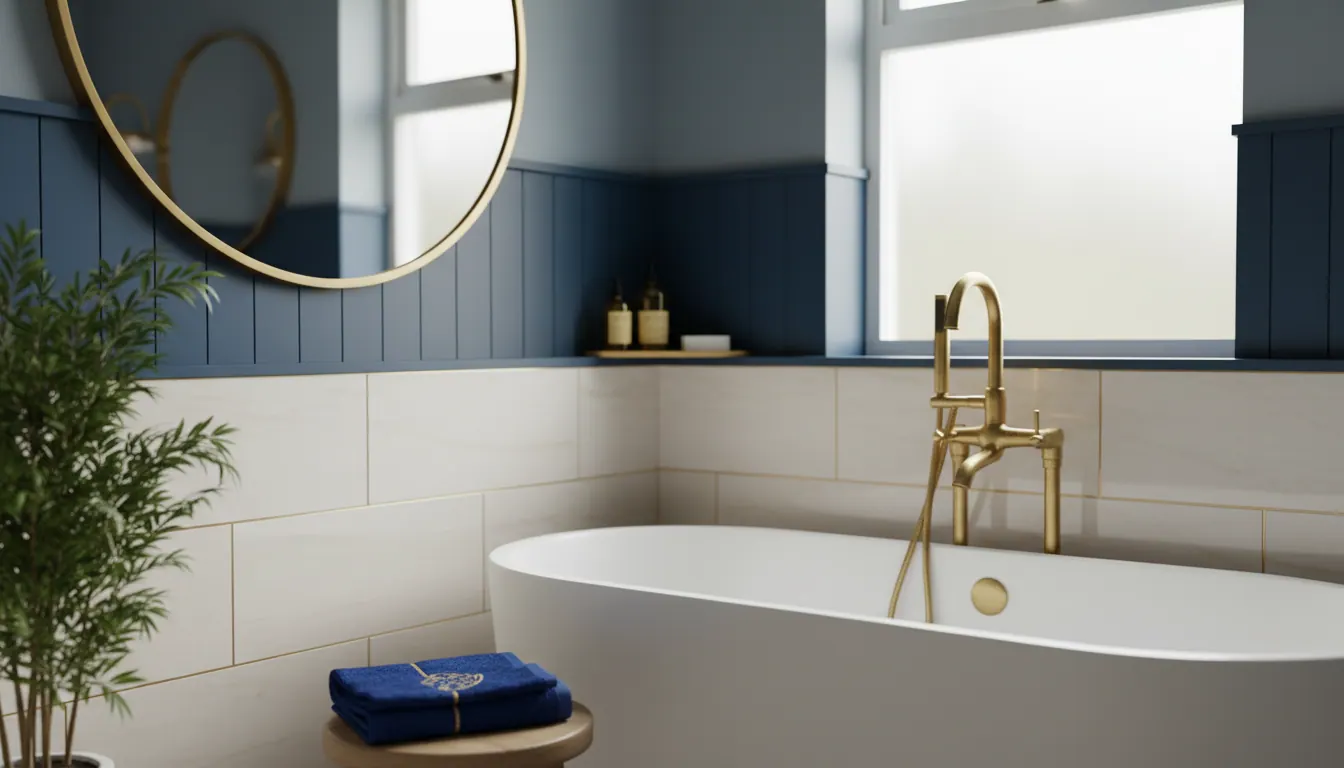
The key is placement. Full-height timber panelling in a shower enclosure is a bad idea unless the product is specifically engineered for wet zones and sealed meticulously. But timber panelling on the lower half of a bathroom wall, below a tiled or vinyl-topped dado rail, looks excellent and is perfectly practical. It adds texture and warmth to what can otherwise be a cold, hard room.
For a cloakroom or a bathroom where the shower is enclosed and the walls do not take direct water, painted MDF tongue-and-groove is a cost-effective way to add real character.
What Are the Best Waterproof Wall Panels for Bathrooms?
For full wet-zone coverage, particularly in shower areas, the products that perform best are:
Acrylic or composite large-format panels. These come in sheets wide enough to cover a shower wall with one or two joins. The join is sealed with a matching trim or colour-matched silicone. Because there are so few seams, there is very little opportunity for water to penetrate. Brands and suppliers vary, and we can advise on what is available locally across South Yorkshire.
Rigid PVC tongue-and-groove cladding. Properly fitted with waterproof adhesive and sealed at all edges and corners, this performs reliably. It is the budget-friendly option and, done neatly, looks clean and fresh. The finish is not as premium as large-format composite panels, but it is a solid choice for a practical family bathroom.
Waterproof laminate or SPC wall panels. These are worth considering if you want a more realistic stone or wood-effect finish without the price of the real thing. The surface is harder and more convincing than standard PVC.
What matters as much as the product is the installation. Panels that are not properly sealed at edges, corners and junctions with the bath or shower tray will let water in regardless of how good the panel itself is.
Is Panelling Cheaper Than Tiling?
Generally, yes. Materials for PVC cladding or composite panels typically cost less than equivalent-quality porcelain tiles. Labour time can also be shorter, because panels do not require the same level of adhesive bed preparation, grouting or grout sealing.
That said, the gap is not always as large as people expect, particularly if:
- The walls need significant prep before panelling can go on.
- You are choosing a premium composite or large-format panel product.
- The room has awkward angles, boxing, or lots of cuts required.
A simple like-for-like comparison: covering a standard shower enclosure in mid-range PVC cladding will usually cost less than covering the same area in large-format porcelain. But a well-tiled bathroom, properly done, will typically add more perceived value to the property and last longer.
We give free quotes, so if you want an honest comparison for your specific bathroom in Barnsley, Sheffield, Rotherham or anywhere across South Yorkshire, just ask us.
What One of Our Customers Said
Julie Warriner had us back for a second job after her bathroom renovation. Here is what she wrote:
Paul and Malc made a beautiful job of our bathroom so we had them back to sort out our garden, we are so pleased with the work they have done for us. Fantastic guys, with excellent communication, would highly recommend!!!!
That is what we aim for every time. A bathroom job done well enough that you want us back for the next thing.
How Panelling Fits Into a Full Bathroom Renovation
If you are planning a complete bathroom refit, panelling does not have to be an either/or choice with tiling. Plenty of bathrooms we fit across South Yorkshire use both: large-format tiles on the shower walls and floor, with tongue-and-groove or painted MDF panelling on the dry walls to add warmth and character.
If you are planning a wet room or level-access shower, it is worth reading our article on bathroom tanking and floor prep in Rotherham and Wombwell, because the waterproofing system underneath matters far more than what goes on the walls. And if you are weighing up tile sizes for the wet areas, our piece on large-format tiling in Sheffield bathrooms explains why bigger tiles mean fewer grout lines to maintain.
Frequently Asked Questions
How much does it cost to panel a bathroom wall in South Yorkshire? It varies depending on the room size, the product you choose and the prep required. PVC tongue-and-groove cladding is the most affordable option. Composite or acrylic large-format panels cost more in materials but can be quicker to fit. The best way to get an accurate figure is to have us take a look and give you a free quote. We cover Barnsley, Sheffield, Rotherham, Wombwell, Hoyland, Penistone, Dodworth, Darfield and the surrounding area.
Is panelling in a bathroom a good idea? Yes, in the right situation. It is low-maintenance, waterproof when properly fitted and can look very smart. It works especially well in cloakrooms, as a feature wall, or in bathrooms where you want a quick refresh without a full strip-out. For full wet rooms or high-spec renovations, tiles often give a better long-term result.
What are the best waterproof wall panels for bathrooms? For shower zones, large-format acrylic or composite panels with minimal joins perform best. Rigid PVC tongue-and-groove cladding is a reliable, cost-effective option when properly sealed. The product matters less than the installation: all edges, corners and junctions need to be sealed properly or water will find its way in.
Is panelling cheaper than tiling? Usually yes, particularly on materials. But the difference depends on the product quality, the amount of prep the walls need, and how complex the room is. Premium composite panels can approach the cost of mid-range tiling. We are happy to give you a straight comparison for your specific job.
Get in Touch
If you are thinking about bathroom wall panelling anywhere across South Yorkshire, whether that is a full renovation in Barnsley or a shower refresh in Rotherham, we are happy to come and have a look and give you a free, no-obligation quote. Between us we have over 60 years of experience in the building trade, and we will tell you honestly what approach will work best for your room and your budget.
Call us on 07817 465504 and we will get something arranged.