Plastering a Full Bathroom in Barnsley: Board, Skim and Spotlights, the Right Way to Prep for Tiling
Bathroom plastering in Barnsley done properly before tiling starts. P&M Home Improvements explain why wall prep is the foundation of a lasting bathroom finish.
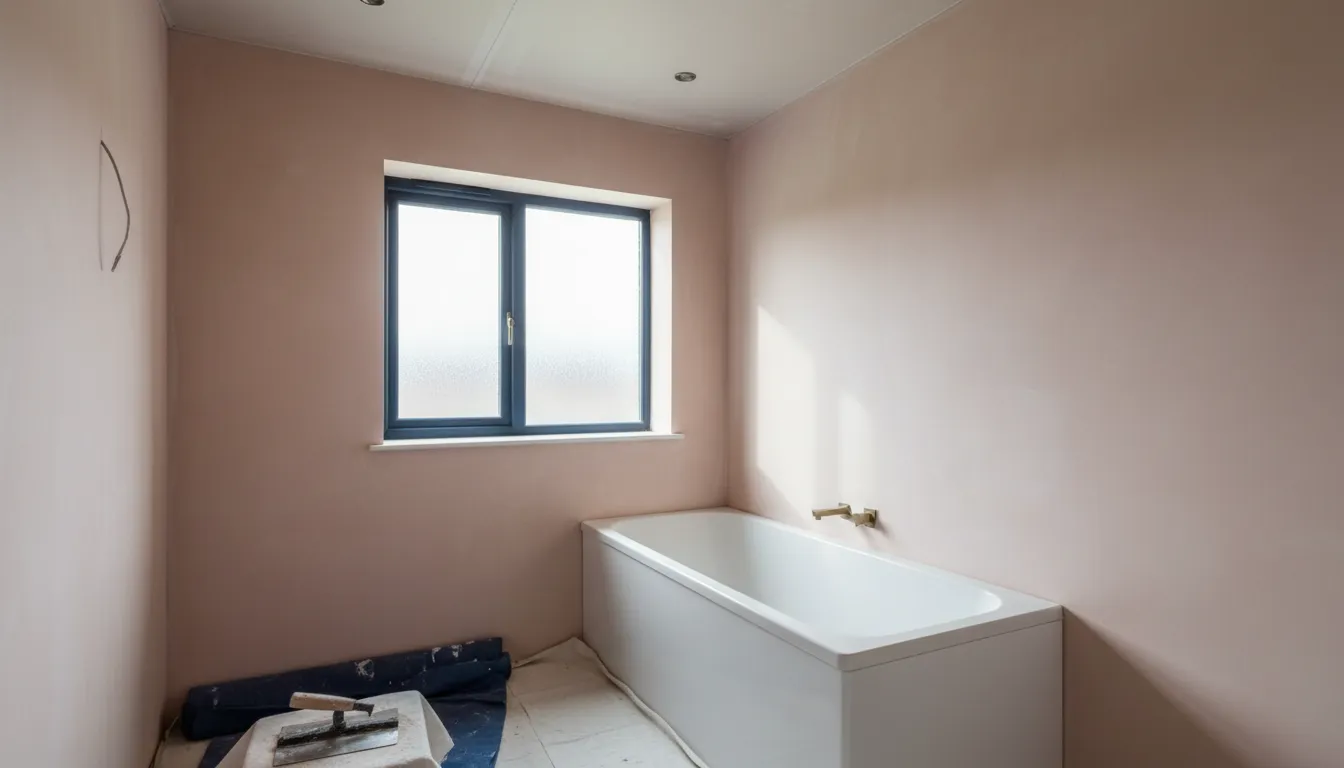
The Wall Behind the Tile Is What Makes a Bathroom Last
Most people planning a bathroom renovation focus on the tiles, the suite, the shower enclosure. That is completely understandable. Those are the things you see every day. But the single biggest reason bathrooms start to look tired within a few years, or worse, start to fail, is what happened to the walls before a single tile went up.
Bathroom plastering is not glamorous. It does not feature on mood boards. But get it wrong and everything on top of it suffers.
We have been fitting bathrooms across Barnsley, Sheffield and South Yorkshire for a long time. Between us, Paul and Malcolm, we have over 60 years of experience in the building industry. We have seen what happens when wall prep is rushed or skipped entirely. We have also seen the difference it makes when it is done properly. That is what this article is about.
Why Bathroom Walls Need Different Treatment to the Rest of Your Home
A bathroom is a wet room, even if it does not look like one. Steam, condensation, splashing and humidity are constants. Standard plasterboard and standard plaster skim are not designed to cope with that without help.
When we strip a bathroom back to bare walls, which is how we start every full bathroom renovation, we are looking at several things straight away:
- Is the existing plaster sound, or is it hollow and blowing off the wall?
- Is there any evidence of damp behind the surface?
- Is the substrate (brick, block, plasterboard) stable enough to take tile weight?
- Are the walls flat and plumb, or do they have movement in them that will telegraph through the finished tiling?
Any of those problems, left unaddressed, will cause tiles to crack, grout to fail or damp to track behind the finished surface. None of those things are cheap to fix once the bathroom is finished.
What We Actually Do: The Wall Prep Process
On a typical full bathroom strip-out in Barnsley or Sheffield, this is how we approach the walls.
First, everything comes off. Old tiles, old adhesive, old plasterboard if it is damaged or saturated. We do not tile over existing tiles, and we do not skim over plasterboard that has been wet for years. If the substrate is not right, we re-board.
We use moisture-resistant (MR) grade plasterboard in bathrooms as a matter of course. It is sometimes called green board or aqua board. It handles the humidity far better than standard board and gives tile adhesive a much more stable surface to grip.
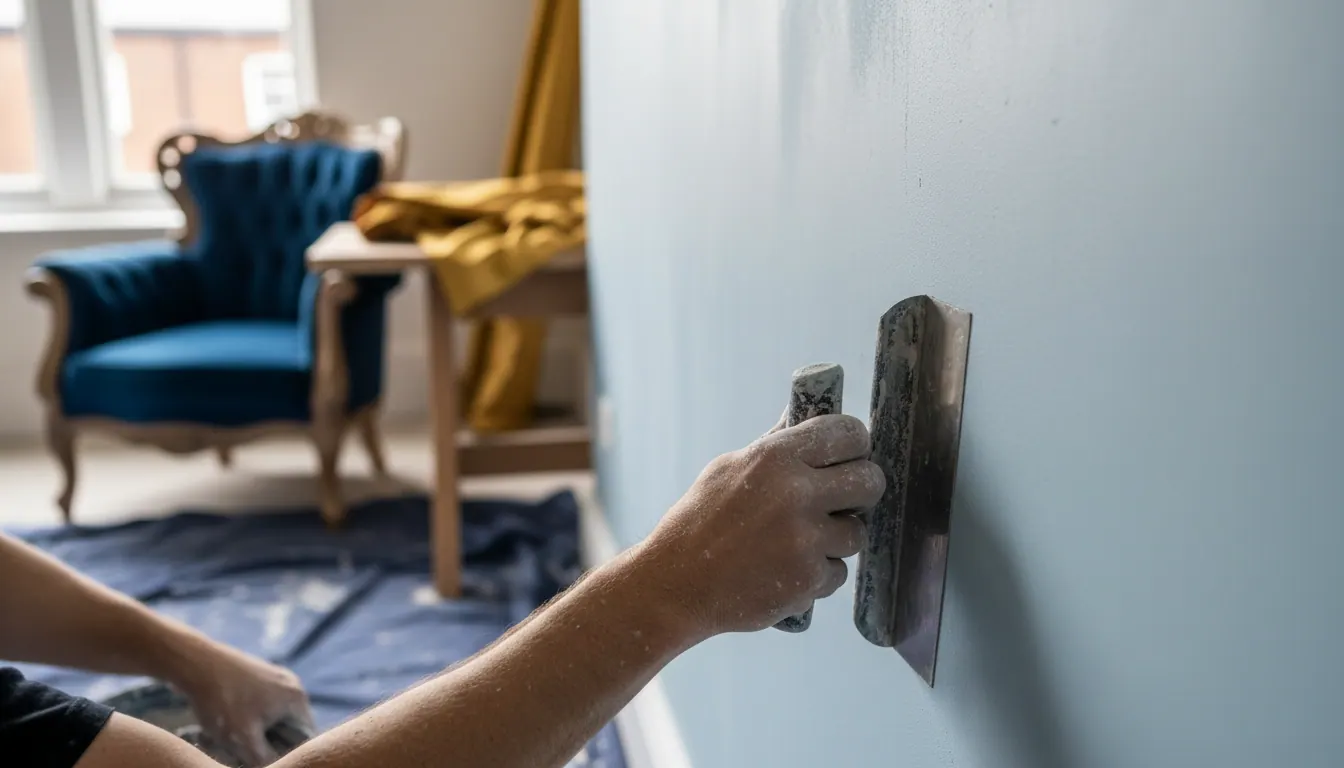
Once the boards are up, we skim. The skim coat gives you a flat, consistent surface across the whole wall. It fills any minor imperfections in the boarding, creates a uniform suction for the tile adhesive, and means the finished tiling sits perfectly flat. Without it, you are relying on the adhesive to do the levelling work, which it is not designed to do.
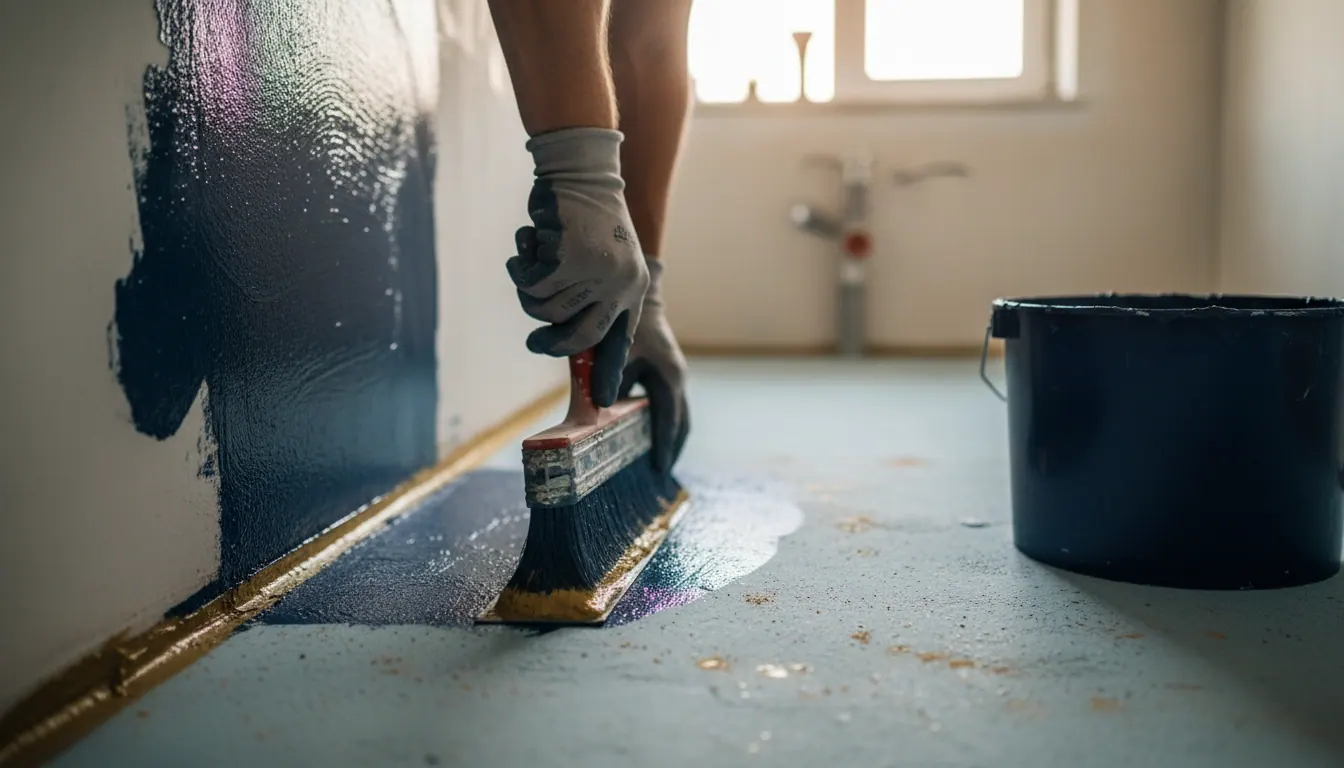
In areas that will be directly wetted, behind a bath or inside a shower enclosure, we also tank. Tanking is a waterproof membrane or coating applied to the wall and floor before tiling. It is the last line of defence if water ever gets behind the tiles. We wrote more about this process in our article on bathroom tanking and floor prep in Rotherham and Wombwell.
The Skim Coat Question: Do You Always Need to Plaster Before Tiling?
This comes up a lot. The short answer is: it depends on what is already there, but in most bathroom renovations, yes.
If you are tiling onto bare, freshly boarded walls, some tilers will go straight onto the board with a suitable primer and adhesive. That can work in the right conditions. But in our experience, a skim coat gives you a better result for several reasons:
- It creates a harder, denser surface than bare board
- It makes it much easier to achieve a perfectly flat tile line, especially with large-format tiles
- It seals the board and gives a consistent key for adhesive
- If you ever need to re-tile in the future, the wall behind is in much better condition
For large-format tiles in particular, wall flatness is critical. A 600x1200mm porcelain tile will not forgive a wall that moves even 2-3mm over its length. The skim coat is what gets you to the tolerance those tiles need. We go into more detail on large-format tiling in our article on large-format tiling in Sheffield bathrooms.
Ceilings Too: Why We Lower and Board Rather Than Skim Over Old Artex
While we are talking about plastering in bathrooms, ceilings are worth a mention. A lot of older homes in Barnsley and across South Yorkshire have Artex ceilings. In a bathroom, that is a problem. Textured ceilings trap moisture and are very difficult to keep clean in a humid environment.
Our standard approach on a bathroom renovation is to lower the ceiling slightly, fit new moisture-resistant board, and install recessed spotlights at the same time. The result is a flat, clean ceiling that handles the bathroom environment properly and looks far more modern.
If you are not doing a full renovation but want to deal with an Artex ceiling elsewhere in the house, we have covered that in detail in our article on plastering over Artex in Sheffield.
What Happens When Bathroom Plastering Is Done Well
Sandra, one of our customers, summed up what a properly managed job feels like from the homeowner's side:
Great work from P&M Home Improvements, very professional, friendly and thorough, would recommend for any home improvement
That word "thorough" is the one that sticks with us. Thoroughness in a bathroom renovation is not about spending more time than necessary. It is about not skipping the steps that are not visible once the job is finished. The wall prep, the boarding, the skim, the tanking. None of it is seen once the tiles are on. All of it determines how the bathroom performs for the next ten or fifteen years.
How This Fits Into a Full Bathroom Renovation
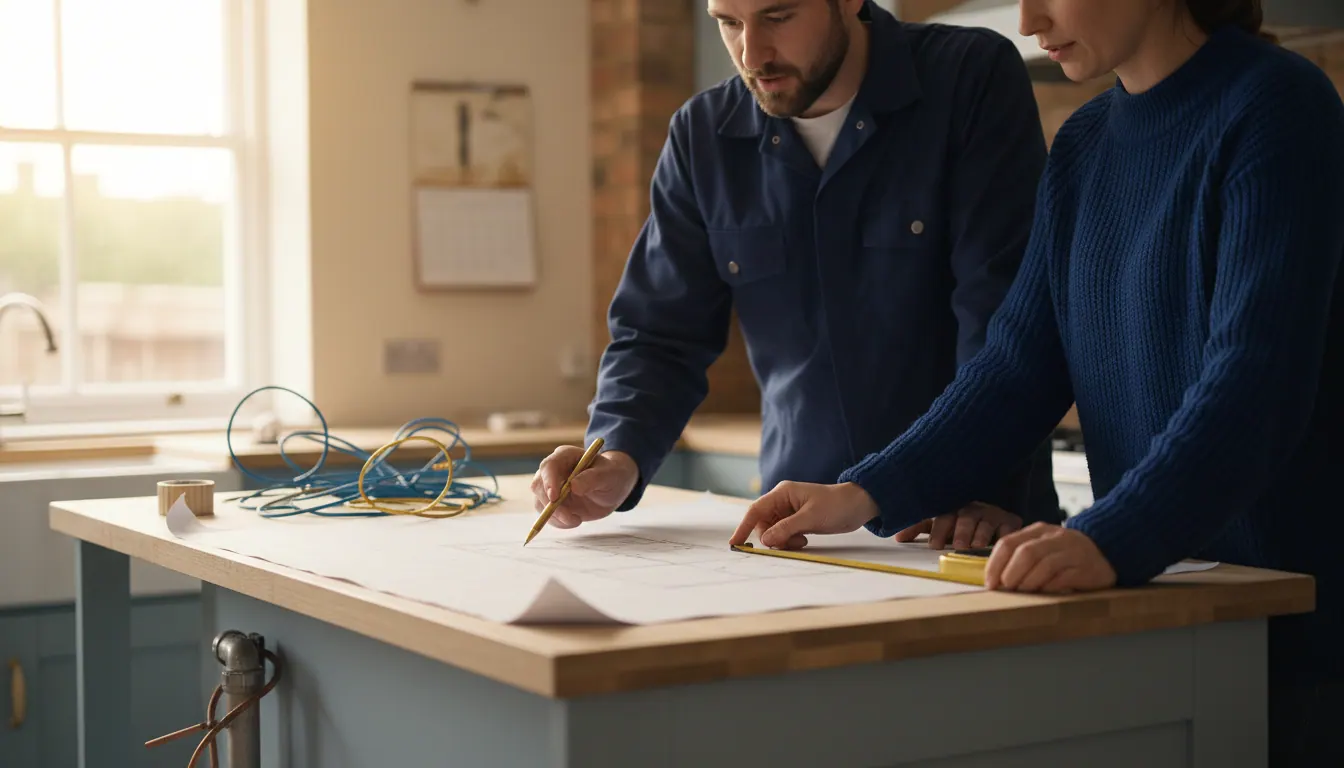
Bathroom plastering does not happen in isolation. It sits within a specific sequence, and that sequence matters.
First fix plumbing and electrics go in before the walls are boarded and skimmed. Pipes and cables need to be chased in or positioned before you close the walls up. If you board and skim first and then discover a pipe needs moving, you are undoing work.
Once the skim is dry and the tanking is cured, tiling can begin. Then second fix plumbing (fitting the suite, shower, taps), second fix electrics (sockets, switches, lights), and finally accessories and finishing.
If you are planning a bathroom renovation and wondering why it takes the time it does, this sequence is exactly why. Rushing one stage creates problems in the next. We explained this in more detail in our article on why your bathroom renovation in Barnsley takes longer than you think.
We Cover Barnsley, Sheffield and Across South Yorkshire
We work across the whole area: Barnsley, Sheffield, Rotherham, Wombwell, Hoyland, Penistone, Dodworth, Darfield and the villages in between. Whether you are planning a full bathroom renovation, need plastering work done before tiling, or want advice on what is actually involved before you commit to anything, we are happy to come out and have a look.
Free quotes, no obligation. We will tell you honestly what needs doing and why.
Frequently Asked Questions
Do I need to plaster bathroom walls before tiling in Barnsley?
In most cases, yes. A skim coat over moisture-resistant board gives you a flat, stable, consistent surface for tile adhesive. It is particularly important with large-format tiles, which require very tight wall flatness tolerances. Going straight onto bare board is sometimes done, but it is not our preferred approach for a bathroom that needs to last.
What type of plaster or board should be used in a bathroom?
Moisture-resistant (MR) plasterboard is the standard for bathroom walls. It is more resistant to humidity than standard board and gives tile adhesive a better base. In direct wet zones such as shower enclosures, tanking (a waterproof membrane or coating) is applied on top of the skim before tiling begins.
How long does bathroom plastering take to dry before tiling?
A skim coat in a bathroom typically needs at least 24 to 48 hours to dry fully before tiling, and longer in cooler or less ventilated conditions. Rushing this stage is a common mistake. Tiling onto plaster that has not fully dried can cause adhesive failure further down the line.
Can you plaster over existing tiles in a bathroom?
We do not recommend it, and it is not something we do. Plastering over tiles creates an unstable base, adds unnecessary thickness to the wall and does not address whatever is happening behind the original tiles. Stripping back to the substrate and starting fresh gives a far better, longer-lasting result.
Get in Touch
If you are planning a bathroom renovation in Barnsley, Sheffield or anywhere across South Yorkshire and want to know what is actually involved, call us on 07817 465504. We will come out, have a look and give you a straight answer. No pressure, no jargon, just honest advice from people who have been doing this for a long time.
No job too big or too small — let's talk it through
Call us- Why Your Bathroom Renovation in Barnsley Takes Longer Than You Think, and Why That's a Good Thing
- Large-Format Tiling in Sheffield Bathrooms: Why Bigger Tiles Mean Fewer Grout Lines and Easier Cleaning
- Plastering Over Artex in Sheffield: Why Skimming Flat Is Better Than Leaving It Textured
- Bathroom Tanking and Floor Prep in Rotherham and Wombwell: Why It's the Hidden Foundation of a Wet Room That Lasts